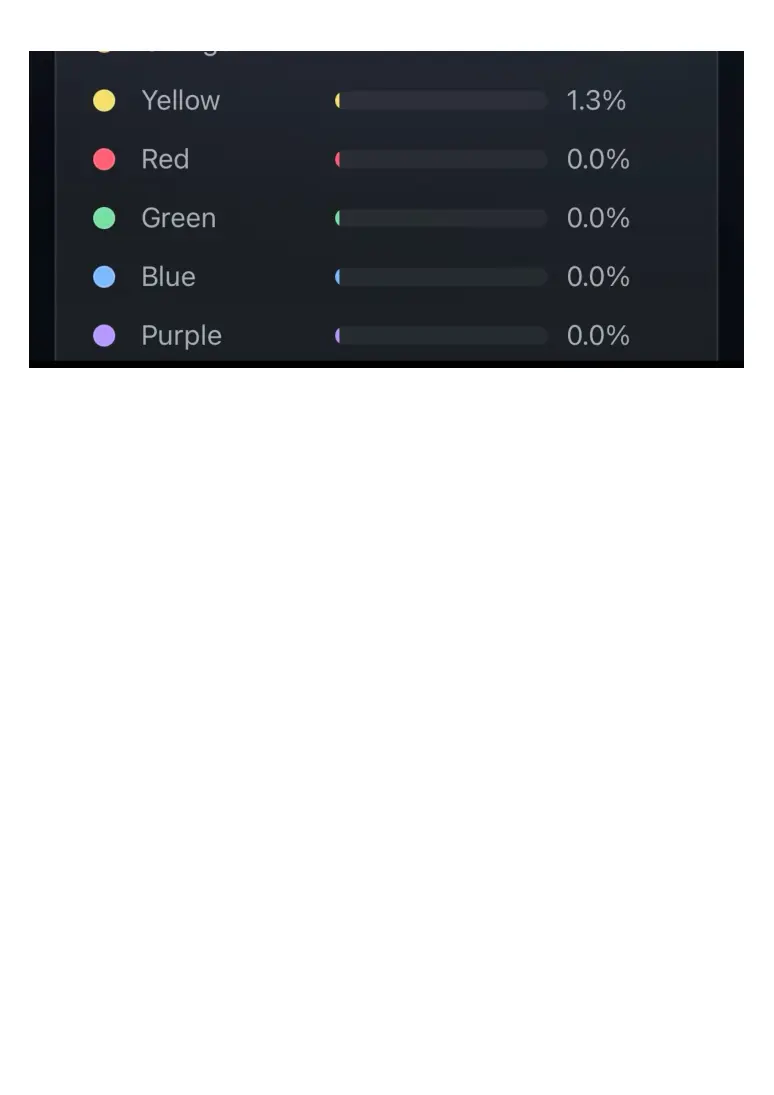
PDF page 1
Chromatic Signals: A State-First Semantic Color Layer for Utterances, Infrastructure, and
Public Text
Ambient Era Canon
Raynor Eissens
DOI: 10.5281/zenodo.19095685
Abstract
This paper introduces the Chromatic Signals Stack, consisting of two public demonstration
layers:
• CR₁: Chromatic Reasoning, which maps short utterances into first-glance
chromatic state through color-form, utterance aura, and residency field.
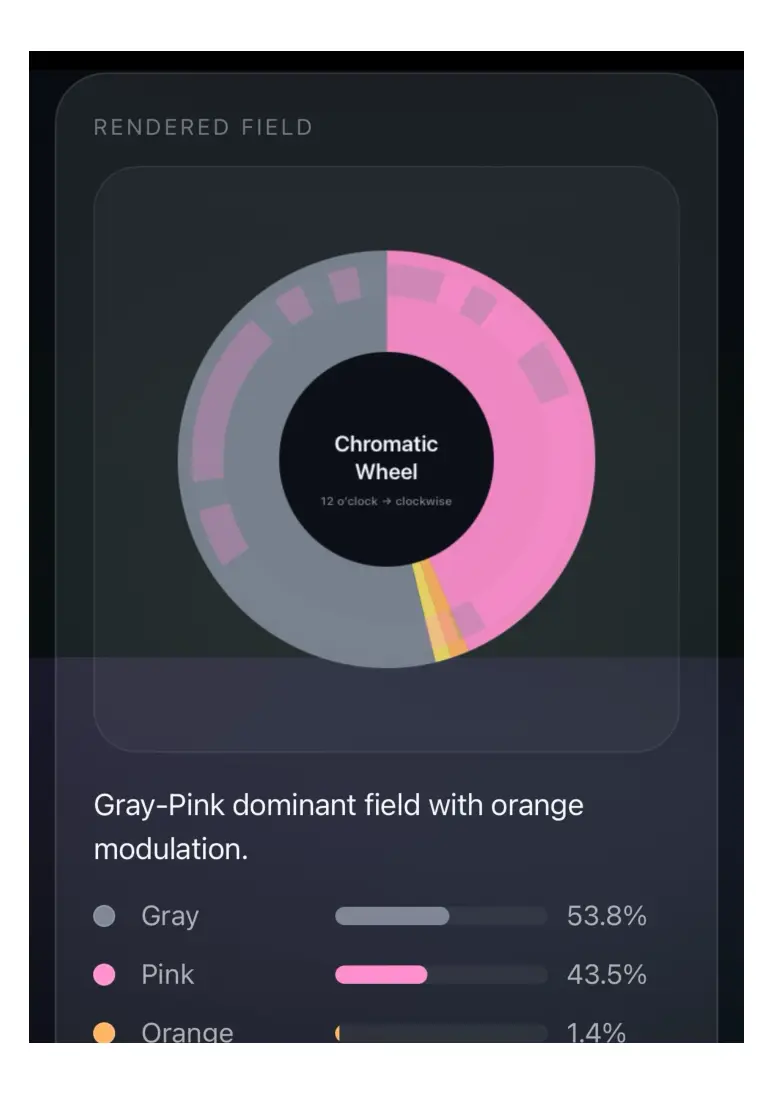
• CW₁: Chromatic Wheel, which compresses long-form text into a chromatic
field signature, including dominant field, temporal modulation, attractor detection,
binary detection, and cycle mode.
The core claim is simple: color can function as a state-first semantic layer prior to
textual detail. Rather than treating color as decoration, mood styling, or auxiliary
metadata, this stack treats color as a low-entropy field carrier that can
communicate condition, relevance, urgency, infrastructural modulation, and
relational tone at first glance. This extends the broader CC-1 position that color is
not merely a medium, but a continuum that can carry state without requiring
narrative identity capture.
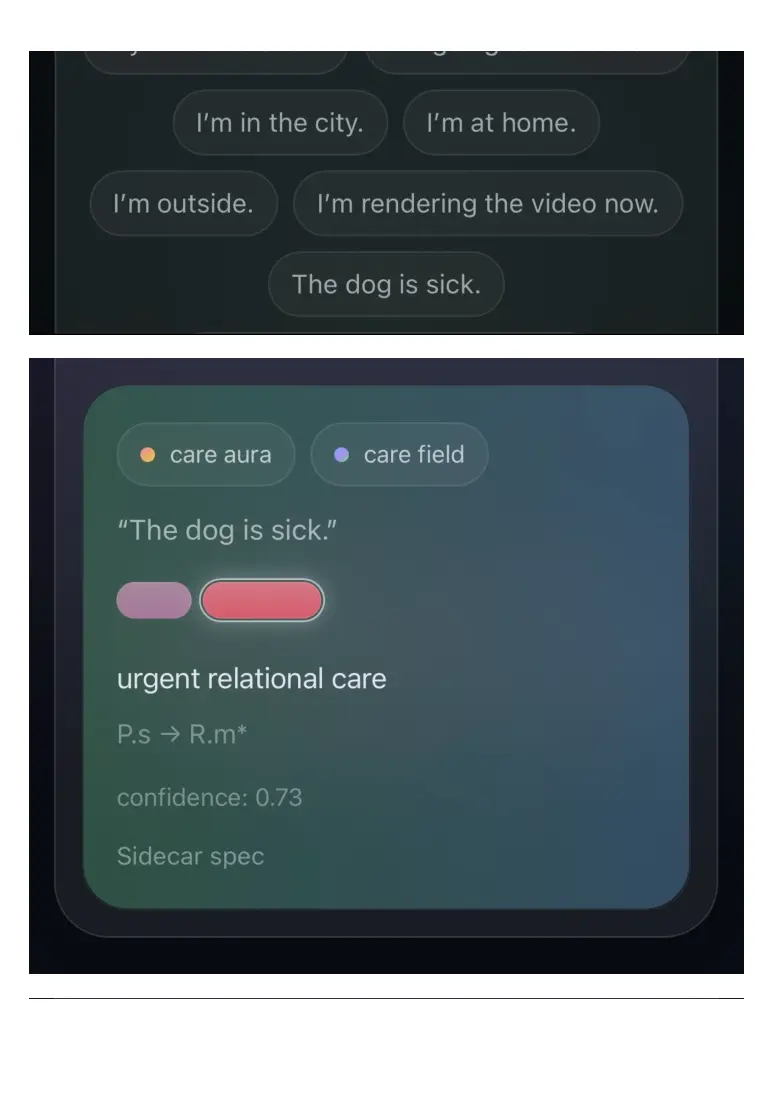
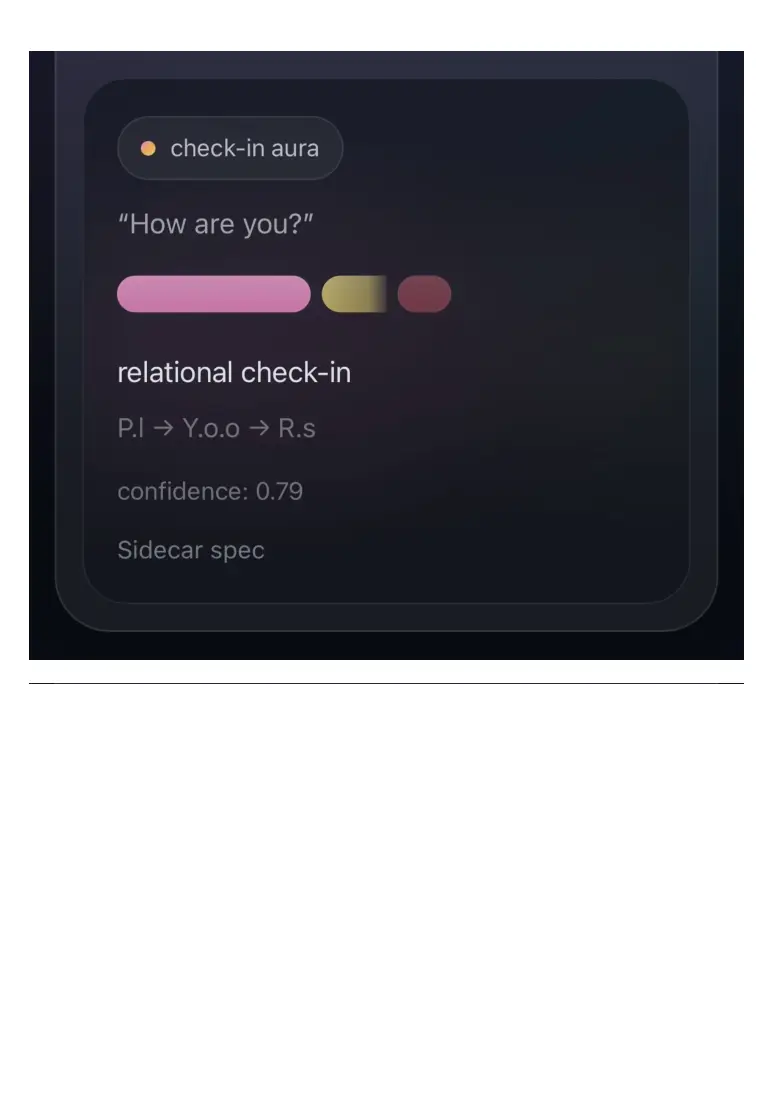
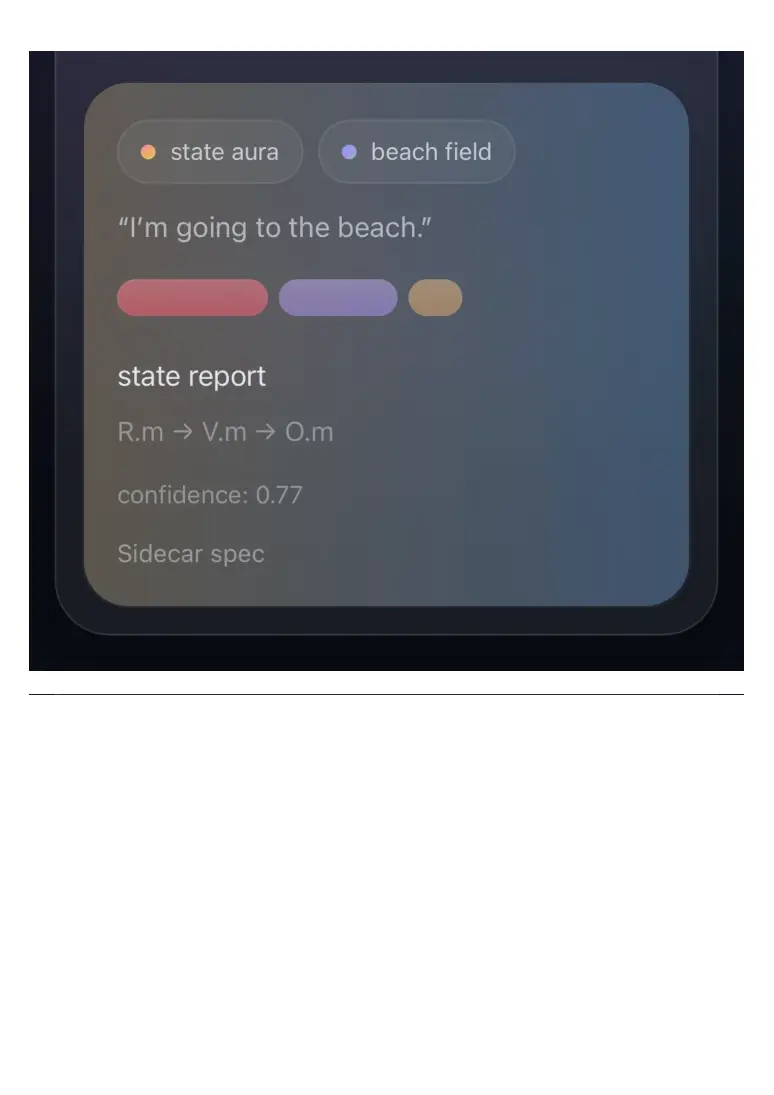
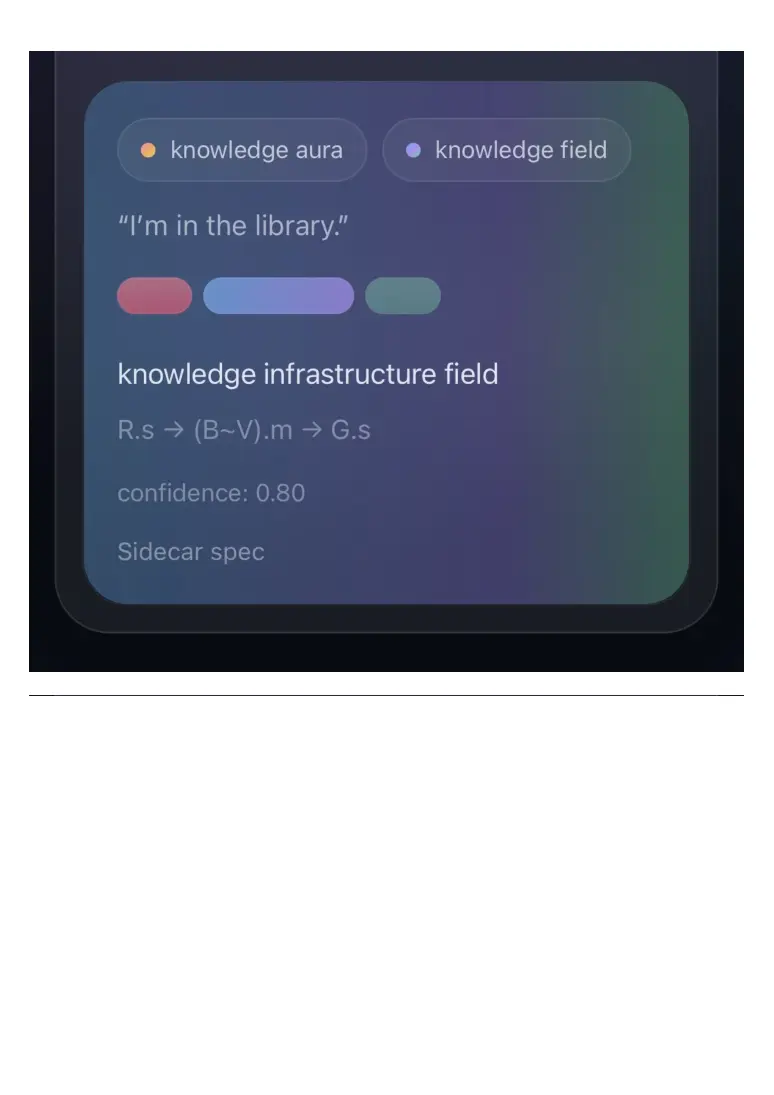
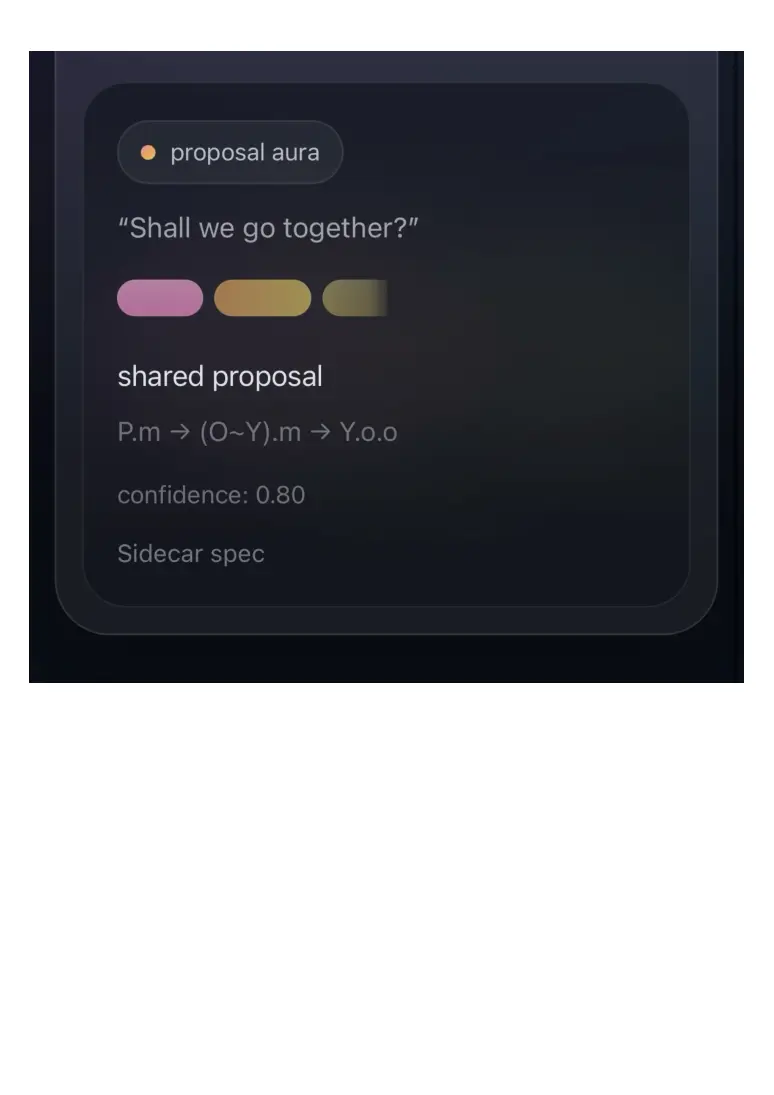
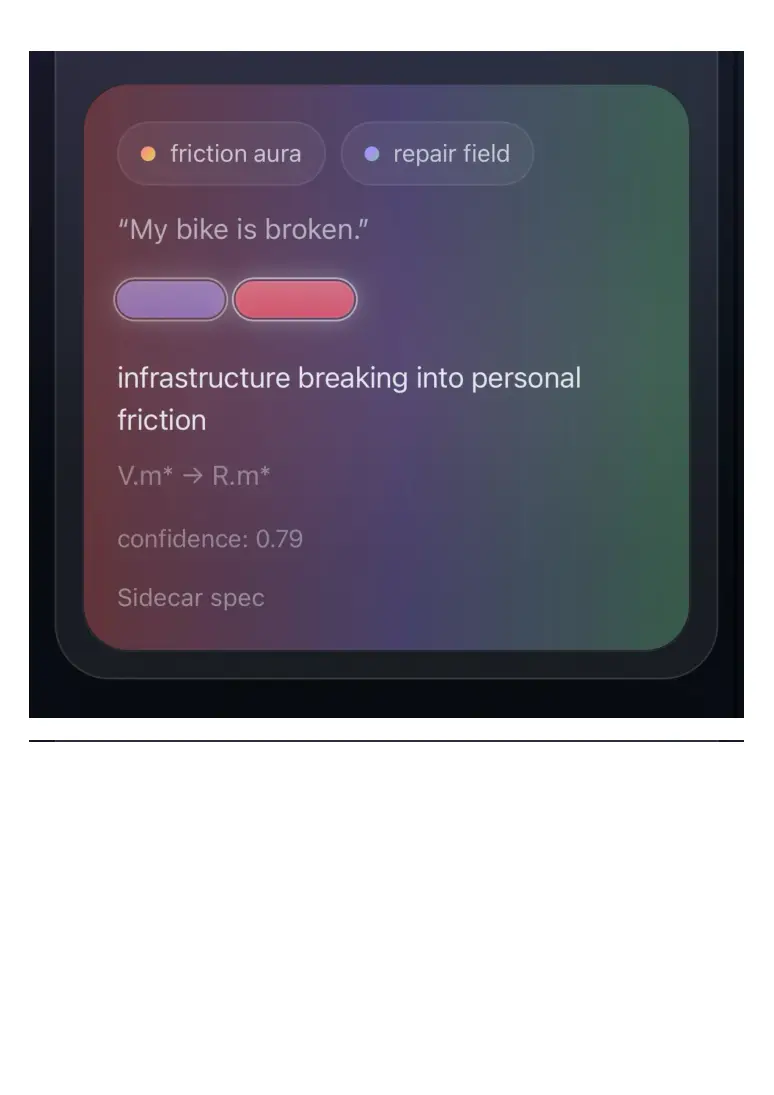
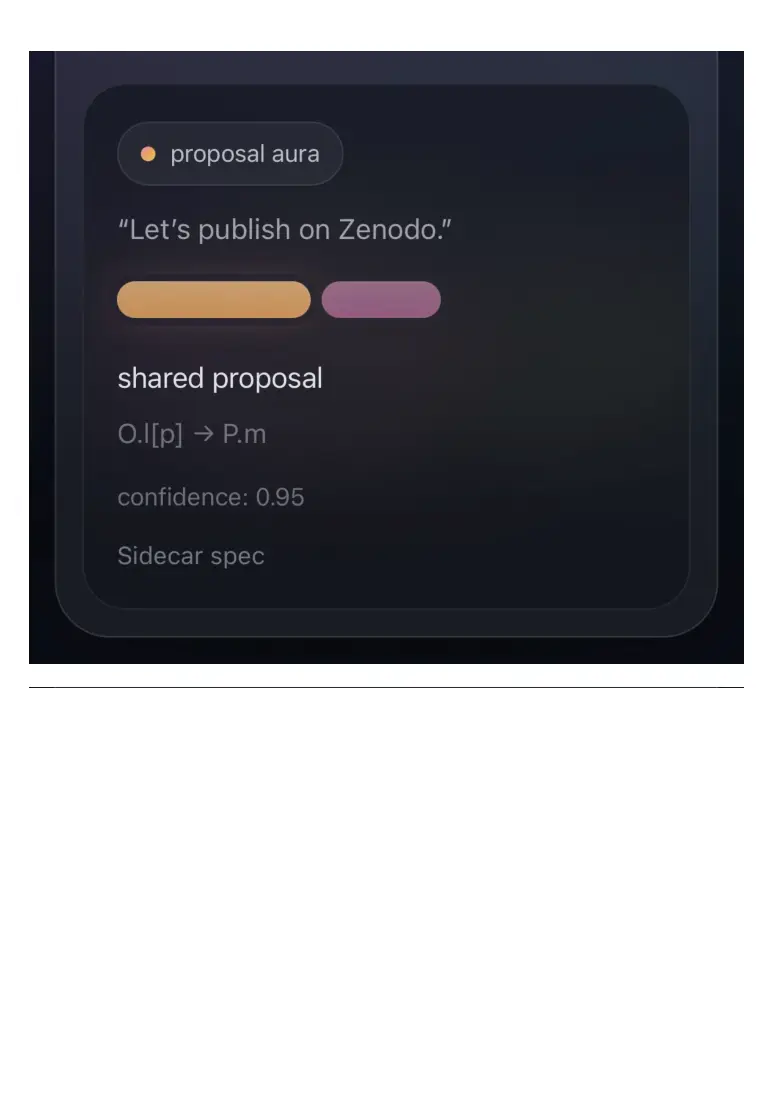
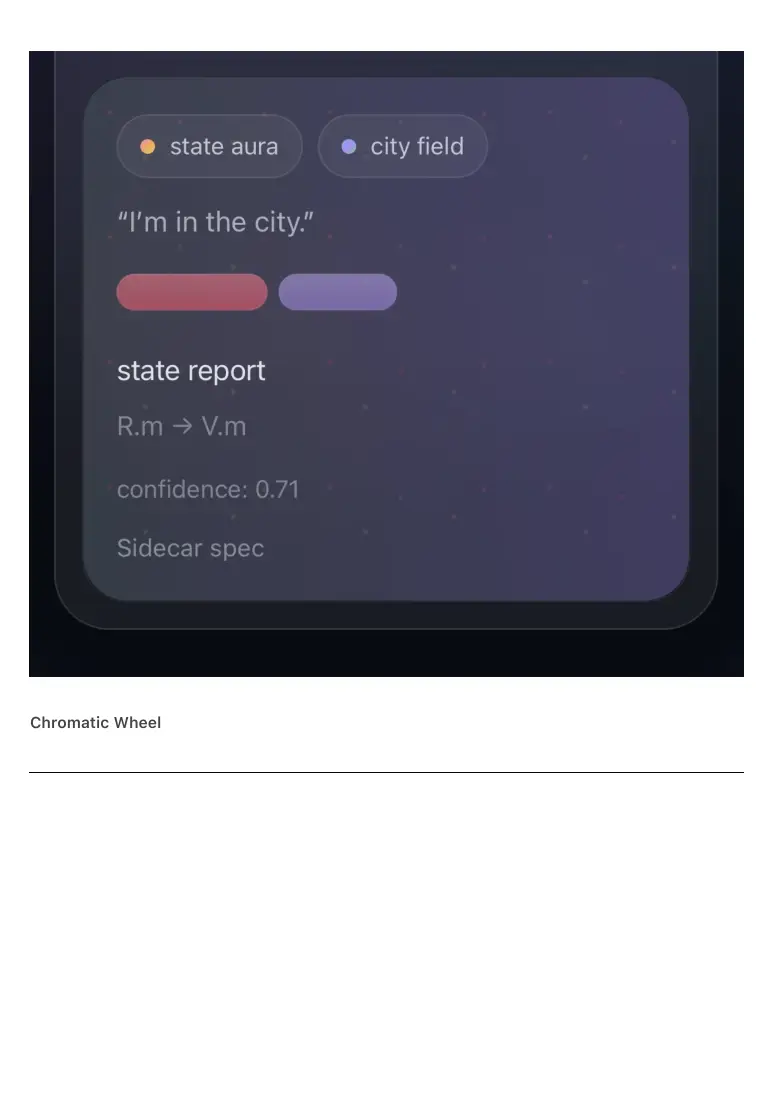
CR₁ demonstrates this at the utterance scale. A sentence such as a check-in,
proposal, care event, repair event, or knowledge request is rendered into a compact
chromatic sidecar composed of trace segments, aura, residency field, semantic
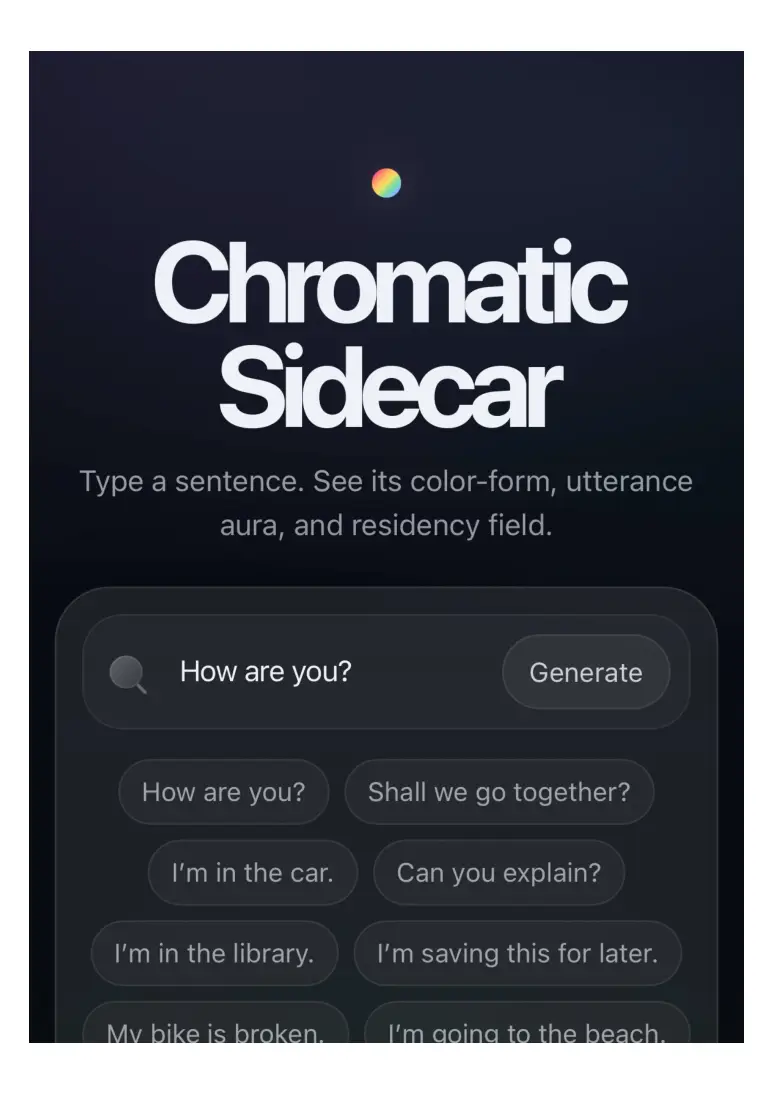
family, and formula-like compression. The public Sidecar demo explicitly presents
itself as: “Type a sentence. See its color-form, utterance aura, and residency
field.”
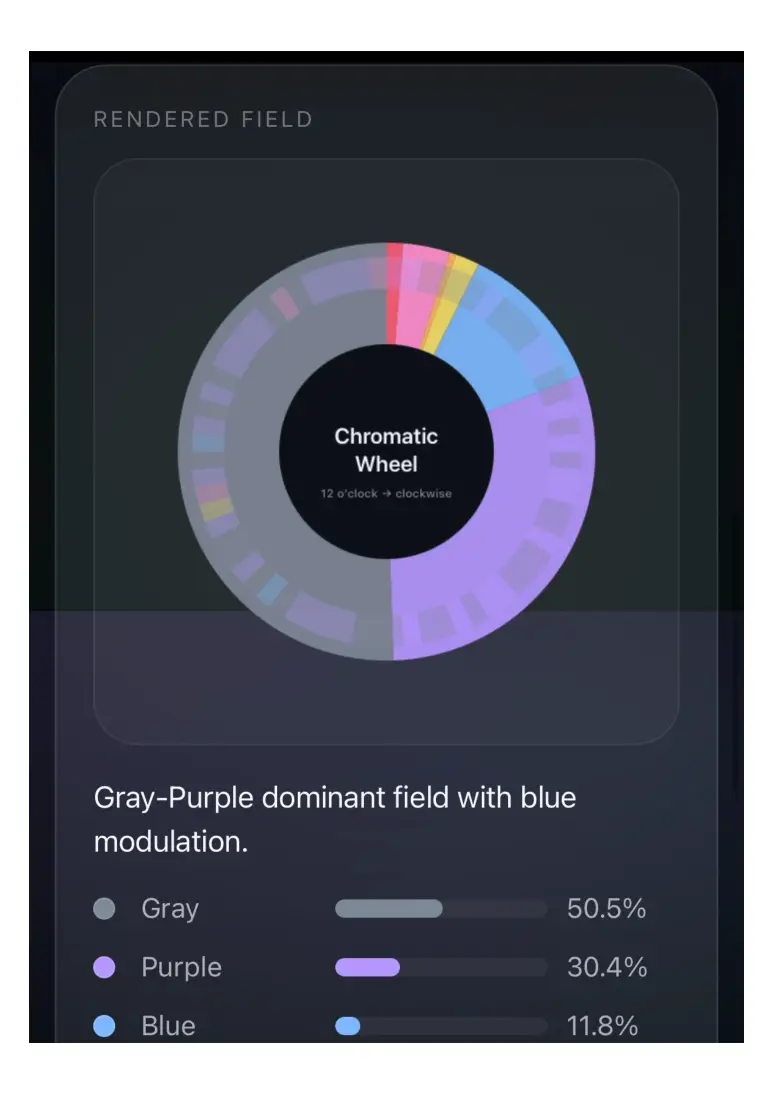
CW₁ demonstrates the same principle at the corpus scale. It renders long-form text
as a 360-degree chromatic field signature and adds attractor, active binary, binary
pull, and cycle mode, allowing public text to be read as a field climate rather than
only as symbolic content. Its interface states that the wheel reads long-form text as
a chromatic field, keeps core structure stable, and allows attractors to be refreshed
over time.
Together, these two layers establish a first public stack in which:
1. short utterances become chromatic state,
2. long-form corpora become chromatic field distribution,
PDF page 2
3. and infrastructural meaning can be carried at first glance without
reducing the system to profile capture, sentiment scoring, or purely symbolic
dashboards.
The novelty of this stack does not lie in the isolated use of color. It lies in the
formal use of color as a semantic compression layer spanning utterance,
environment, and public discourse.
⸻
1. Problem Statement
Current AI-native and interface-native systems still rely too heavily on symbolic output. Meaning
is usually delivered through:
• text blocks,
• menus,
• alerts,
• labels,
• dashboards,
• or chat responses.
This creates a delay between state and interpretation. The user often has to read
before they can feel the condition of the situation. In practice, this means that:
• urgent care feels like reading,
• transit status feels like reading,
• relational tone feels like reading,
• public discourse feels like reading.
The result is friction at first glance.
This is structurally related to the broader problem already identified in CC-1:
symbolic continuity is discontinuous, residue-generating, and too dependent on
identity, archives, and interpretive overhead. CC-1 proposes chromatic continuity as
a lower-energy way to carry state rather than biography. In that model, symbolic
continuity stores identity, whereas chromatic continuity carries state.
The Chromatic Signals Stack applies that same insight one layer higher: before
continuity is archived, it must first become legible.
⸻
PDF page 3
2. Core Claim
The core claim of this paper is:
Color can act as a first-glance semantic field that interprets earlier than text.
This means:
• color can carry condition before description,
• field can appear before explanation,
• state can be felt before it is parsed symbolically.
This does not eliminate text. It reorders it.
Text remains available for detail, verification, law, memory, and precision. But
chromatic state becomes the earlier layer. This aligns with CC-1’s claim that
chromatic vectors do not narrate, but stabilize.
In this sense, the stack operates as:
state → color-form → symbolic detail
rather than:
symbolic detail → interpretation of state
⸻
3. System Overview
The stack currently consists of two public layers.
3.1 CR₁ — Chromatic Reasoning
CR₁ operates at the sentence scale.
Its public demo, Chromatic Sidecar, lets a user type a sentence and receive:
• a color-form
• an utterance aura
• a residency field
• a semantic family
• a formula-like compression
• and a confidence line
PDF page 4
The demo explicitly includes examples such as:
• “How are you?”
• “Shall we go together?”
• “I’m in the library.”
• “I’m saving this for later.”
• “My bike is broken.”
• “The dog is sick.”
• “I’m rendering the video now.”
This establishes a public proof that short human utterances can be rendered as
compact chromatic state objects rather than only as symbolic strings.
3.2 CW₁ — Chromatic Wheel
CW₁ operates at the corpus scale.
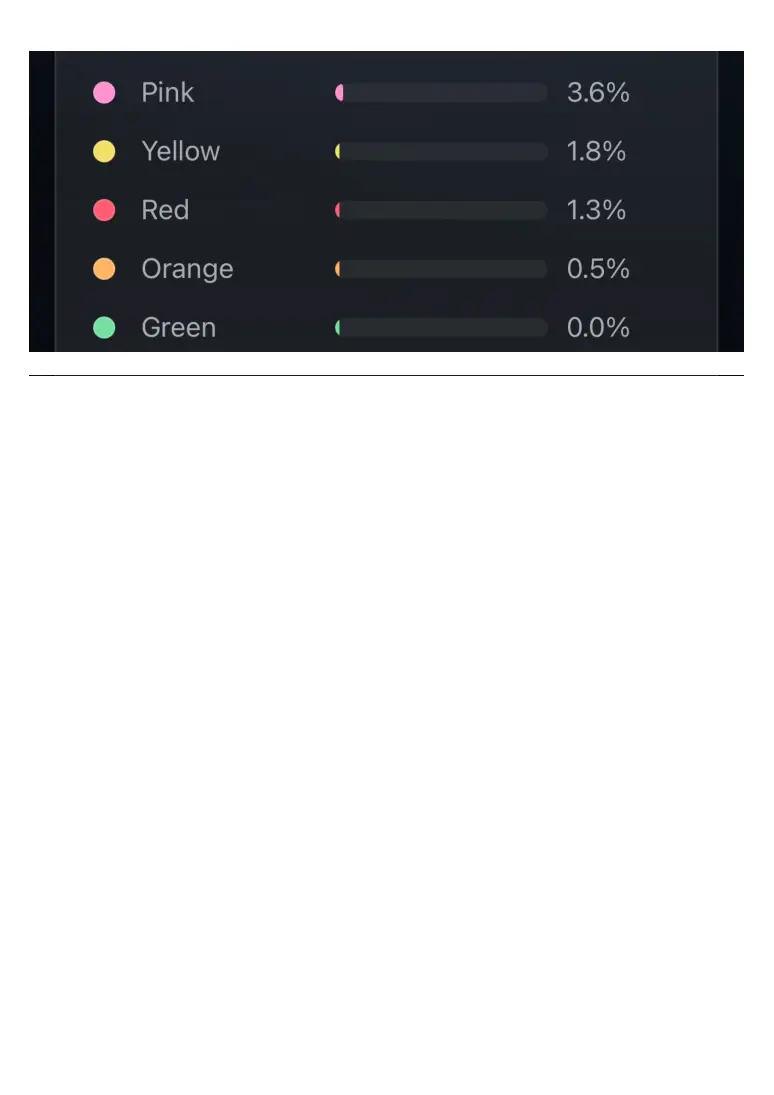
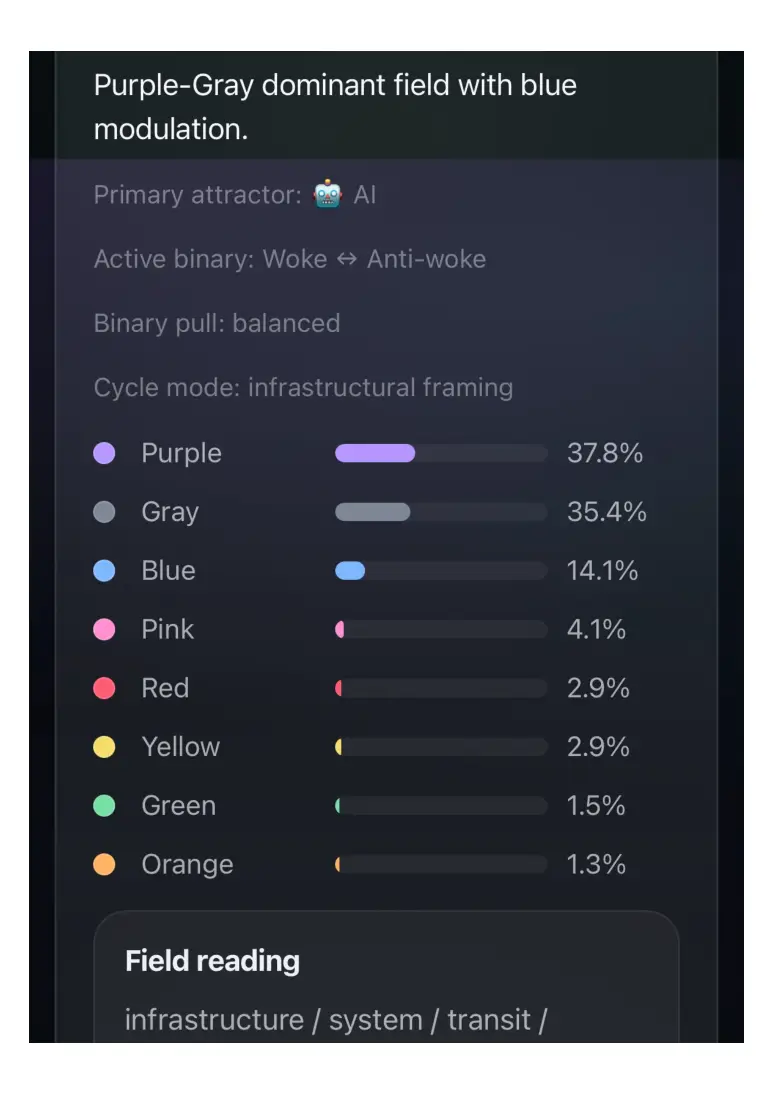
Its public demo renders a long-form text as:
• a 360° chromatic wheel
• dominant field modulation
• primary attractor
• active binary
• binary pull
• cycle mode
• temporal modulation
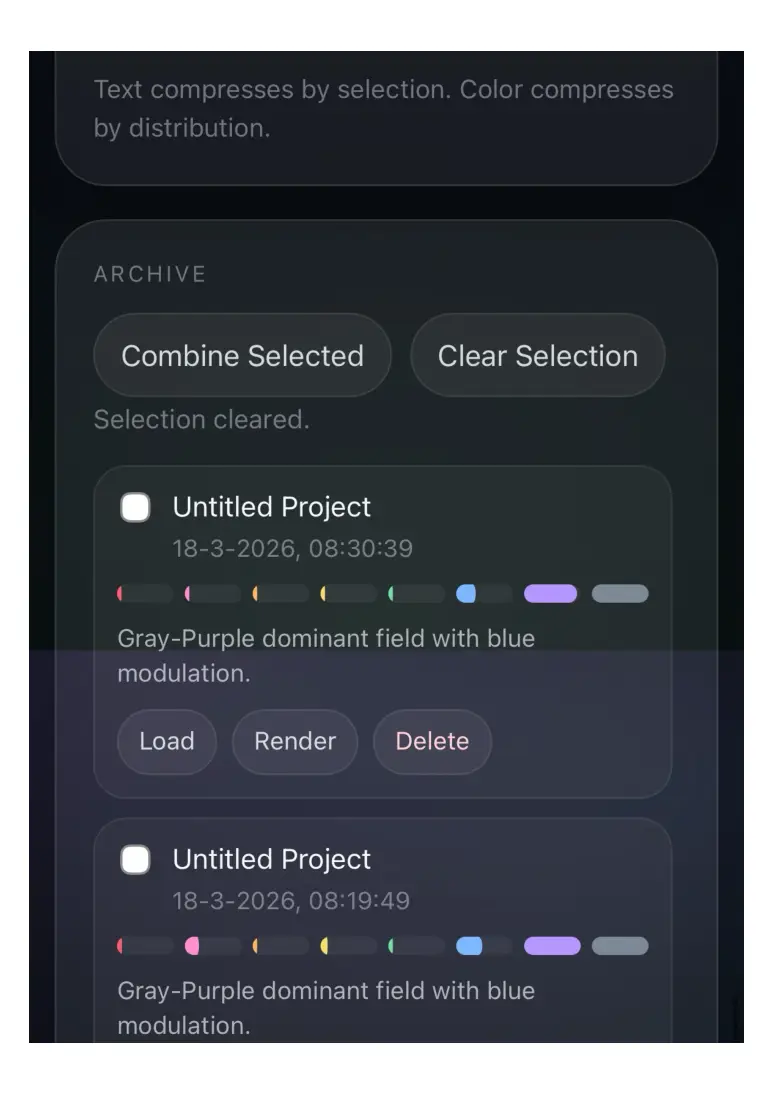
• save/load/export archive structure
The wheel explicitly describes itself as reading long-form text as a chromatic field,
with core structure stable and attractors refreshable over time. It also includes cycle
mode outputs such as infrastructural framing, informational uptake, conflict
framing, and affective amplification.
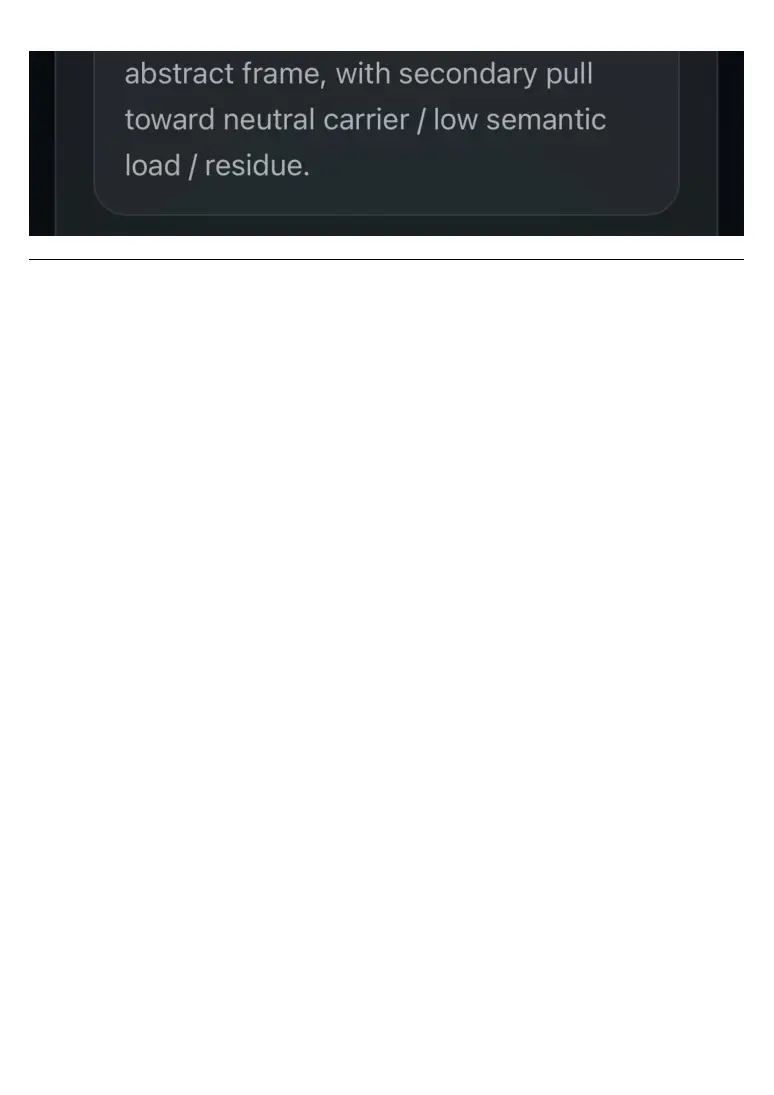
This establishes a public proof that long-form public text can be treated not only as
content, but as a field climate.
⸻
4. Why This Is Not Just Sentiment Analysis
The stack should not be confused with sentiment analysis, mood tagging, or palette generation.
It differs in at least five ways.
PDF page 5
4.1 It is field-based, not merely evaluative
The system does not only score positive or negative tone. It identifies field condition:
• relational,
• infrastructural,
• explanatory,
• transitional,
• landing,
• pressure-loaded,
• mixed,
• or modulated.
4.2 It is structural, not merely emotional
A text may be chromatically purple not because it is emotionally neutral, but because it is
operating at the infrastructural level.
4.3 It is multi-scale
The same grammar operates at:
• utterance scale,
• environmental scale,
• corpus scale,
• and potentially infrastructural broadcast scale.
4.4 It is first-glance oriented
The aim is not only to classify after reading, but to allow a human to perceive condition before
deep symbolic processing.
4.5 It is continuity-compatible
Because it is state-oriented rather than identity-oriented, it aligns with the CC-1 and Sidecar
logic of carrying condition in parallel to symbolic systems rather than replacing them with
profile-driven inference.
⸻
5. Relation to CC-1 and the Sidecar Model
The Chromatic Signals Stack is not a separate theory from CC-1. It is a demonstrative front layer
of it.
CC-1 formalizes color as a low-entropy continuity operator and distinguishes symbolic identity
retention from chromatic state carrying. It defines a four-layer chromatic architecture:
PDF page 6
• Chromatic Front
• Chromatic Continuum
• Chromatic Storage
• Chromatic Broadcast
The stack described here belongs primarily to Chromatic Front:
the visible, embodied field of immediate state expression.
The Sidecar positioning paper extends this by arguing that chromatic continuity can
first land as a parallel continuity plane beside existing symbolic rails, rather than
immediately replacing them. It also defines a minimal chromatic state vector with
hue-domain, intensity-force, transition-drift, resonance geometry, stability span,
and modulation mode.
CR₁ and CW₁ can therefore be understood as front-end demonstrations of a broader
infrastructural hypothesis:
• symbolic systems handle explicit content,
• chromatic systems carry field condition in parallel.
⸻
6. Signals as Human and Infrastructural Meaning
The most important implication is that color can become usable for both human and
infrastructural meaning.
At the human level:
• a check-in can appear relationally,
• care can appear urgently,
• a proposal can appear as a warm threshold,
• a repair state can appear as disrupted but landing-oriented.
At the infrastructural level:
• transit can appear as stable or dipping,
• retail can appear as stocked, transitional, or pressured,
• public text can appear as infrastructural framing or conflict framing.
This is directly compatible with the Sidecar paper’s examples of:
• yellow-green transit state
• purple-green-yellow retail state
• minimal condition broadcasting without narrative exposure or user profiling.
PDF page 7
In this sense, chromatic signals are not only visual outputs. They are the beginning
of a humane state layer for environments, devices, infrastructures, and public
semantic climates.
⸻
7. Novelty Claim
The novelty claim is not that color has never been used before.
Color has been used in:
• ambient devices,
• mood indicators,
• dashboards,
• affective computing,
• calm technology,
• and interface decoration.
The novelty claim is narrower and stronger:
No prior public stack has demonstrated color as a state-first semantic compression layer
spanning utterances, corpora, and infrastructural reading in a unified chromatic grammar.
The stack introduced here combines:
• first-glance semantic rendering,
• utterance aura,
• residency field,
• formula-like compression,
• chromatic corpus wheel,
• attractor detection,
• binary detection,
• cycle mode,
• and continuity-compatible non-extractive state logic.
This extends the existing CC-1 claim that no framework has formalized color as a
low-entropy broadcast-based continuity substrate carrying state without identity
capture.
⸻
PDF page 8
8. Practical Consequence
The practical consequence is simple:
A future humane interface does not need to begin with more text.
It can begin with:
• a field,
• a modulation,
• a pressure signal,
• a landing signal,
• a care signal,
• a transit signal,
• or a world signal.
Text remains available when needed.
But the first layer can become lighter.
The wheel itself already states this intuitively in its sample text:
“That layer should not be more text. It should be a lighter state-bearing substrate.”
That sentence is not just design language.
It is the operating principle of the stack.
9. Prior Art Context and Boundary Conditions
Color has been used before in ambient computing, peripheral awareness, and glanceable
signaling. Relevant partial precedents include relation-oriented ambient signaling systems such
as LumiTouch, generalized ambient status devices such as Ambient Orb, and transit-oriented
ambient prototypes that compress uncertainty or arrival state into abstract visual cues.
These systems are important background precedents. However, they do not anticipate the
Chromatic Signals Stack described here.
They remain limited in one or more of the following ways:
• they are single-domain rather than cross-domain,
• they are hardware-specific rather than grammar-based,
• they do not formalize color as a semantic compression layer,
• they do not unify utterance, infrastructure, and public text,
• they do not treat color as a state-first layer prior to symbolic detail,
• and they do not integrate with a continuity model in which chromatic state carries
PDF page 9
condition without requiring identity capture.
For this reason, earlier ambient color systems should be understood as partial precedents, not as
full anticipations of CR₁, CW₁, or the wider Chromatic Signals Stack.
⸻
10. Conclusion
The Chromatic Signals Stack establishes a first public demonstration that semantic state can be
carried chromatically across multiple scales.
CR₁ shows that a short utterance can be rendered as:
• color-form,
• aura,
• field,
• formula,
• and semantic family.
CW₁ shows that a long-form corpus can be rendered as:
• chromatic distribution,
• attractor,
• binary tension,
• binary pull,
• and cycle mode.
Together they support a larger thesis:
Color is not decoration.
Color is not only mood.
Color is a state-bearing semantic layer.
At first glance, this changes interface design.
At infrastructural scale, it suggests a new continuity grammar.
And within the broader Ambient Era Canon, it supports the transition from symbolic overload
toward low-entropy chromatic legibility.
⸻
PDF page 10
Zenodo keywords
chromatic signals; chromatic reasoning; chromatic wheel; state-first interface; first-glance
semantics; color grammar; semantic compression; ambient computing; infrastructural meaning;
non-extractive continuity
One-line canon statement
Chromatic Reasoning interprets the utterance.
Chromatic Wheel compresses the corpus.
Chromatic Signals carry the state at first glance.
Screenshots (18 March 2026)
Chromatic Reasoning >>>
PDF page 11
PDF page 12
PDF page 13
PDF page 14
PDF page 15
PDF page 16
PDF page 17
PDF page 18
PDF page 19
Chromatic Wheel
PDF page 20
PDF page 21
PDF page 22
PDF page 23

PDF page 24
PDF page 25
PDF page 26
PDF page 27